Warehouse Solar Lighting: Revolutionizing Industrial Illumination
Overview
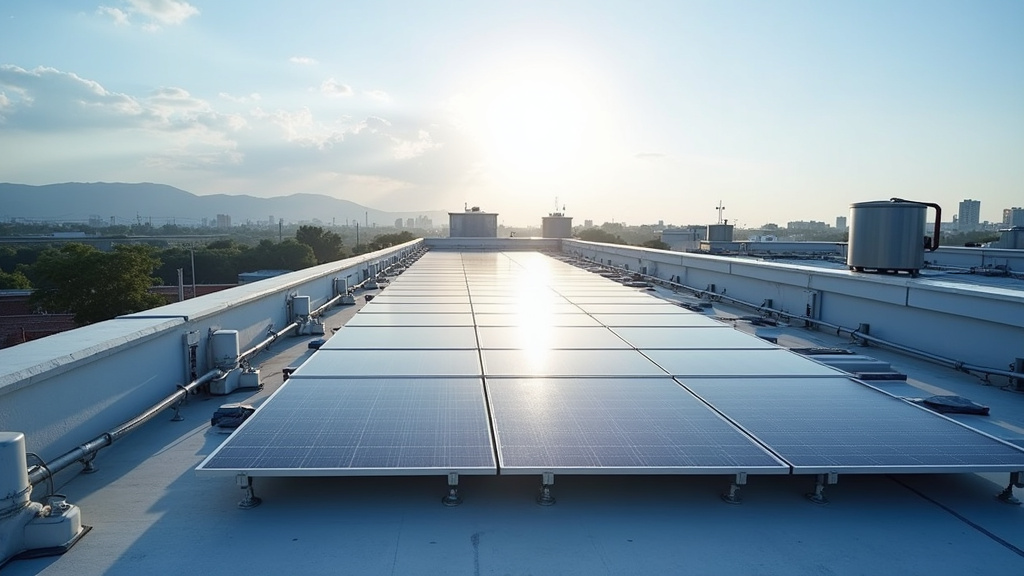
Warehouse solar lighting is a cutting-edge solution transforming the way we illuminate large industrial spaces. This innovative technology leverages the power of solar energy to provide efficient, cost-effective, and environmentally friendly lighting for warehouses, distribution centers, and other commercial facilities. By harnessing the sun's energy, these systems offer a sustainable alternative to traditional grid-connected lighting, reducing energy consumption and operational costs.
Key Benefits:
- Cost Savings: Solar lighting significantly reduces electricity bills by harnessing free, renewable energy.
- Environmental Friendliness: Minimizes carbon footprint and reduces reliance on non-renewable energy sources.
- Reliability: Provides consistent lighting without interruption from grid failures or power outages.
- Flexibility: Easy to install, maintain, and expand, catering to various warehouse sizes and layouts.
- Longevity: High-quality solar panels and LED lights ensure a long service life, reducing maintenance needs.
Warehouse Solar Lighting: A Comprehensive Comparison
Features & Performance
Solar Panel Efficiency: Modern warehouse solar lighting systems boast high-efficiency solar panels, typically reaching 20-22% efficiency. This ensures optimal energy harvesting, even in less-than-ideal sunlight conditions.
LED Lighting Durability: LED lights used in these systems have a remarkable lifespan of 50,000 hours or more, making them highly efficient and long-lasting. This contrasts with traditional incandescent bulbs, which have lifespans of just 1,000 hours.
Light Distribution: Advanced optical designs distribute light evenly across warehouse floors, eliminating dark spots. This ensures optimal visual comfort and safety for workers.
Dimming & Control: Many systems offer dimming capabilities and smart controls, allowing for flexible lighting adjustments based on occupancy and time of day.
Industry Example: A study by the U.S. Department of Energy found that LED lighting in warehouses reduced energy consumption by 50-75% compared to traditional lighting.
Cost Analysis & ROI
Initial Investment: Warehouse solar lighting systems can range from $75 to $200 per square foot, with prices influenced by panel quality, system complexity, and local installation costs.
Energy Savings: On average, industrial solar lighting can save 40-60% on energy bills, paying for itself within 3-5 years. This significant reduction is due to the elimination of grid electricity costs.
Case Study: A 100,000 sq. ft. warehouse in California implemented solar lighting, achieving an annual energy savings of $150,000, a 5-year ROI, and a substantial decrease in carbon emissions.
Financing Options: Leases, power purchase agreements (PPAs), and loans make solar lighting accessible, allowing businesses to operate within their budgets.
Market Trends & Statistics
- The global warehouse lighting market is expected to reach $11.5 billion by 2027, growing at a CAGR of 10.5% from 2020 to 2027.
- Solar lighting adoption in warehouses has increased by 35% annually over the past 5 years, driven by rising energy costs and environmental concerns.
- North America accounts for the largest share of the market, with the U.S. leading the way in warehouse solar lighting innovation.
Implementation: Step-by-Step Guide
Step 1: Site Assessment
- Inspect the warehouse roof or designated area for sunlight exposure, obstructions, and structural integrity.
- Ensure minimal shading from trees or neighboring buildings to maximize solar panel efficiency.
Step 2: System Design
- Calculate warehouse lighting requirements based on square footage and intended use.
- Select an appropriate solar panel system size and configuration to meet energy needs.
- Consider additional factors like temperature, humidity, and local climate for panel longevity.
Step 3: Installation
- Prepare the installation site, ensuring it is clean, level, and free from debris.
- Mount solar panels securely, following manufacturer guidelines and local building codes.
- Install lighting fixtures and wiring, ensuring proper grounding and safety measures.
- Test the system for any faults or issues before commissioning.
Step 4: Commissioning & Testing
- Commission the system, programming timers, dimmers, and any smart controls as required.
- Conduct thorough testing, including load testing to ensure the system meets lighting demands.
- Verify energy monitoring systems to track energy production and consumption.
Troubleshooting:
- Regularly inspect panels for dirt or debris, cleaning as needed to maintain efficiency.
- Monitor lighting performance, addressing any flickering or dimming issues promptly.
- Stay updated on local regulations and incentives for solar energy adoption.
Feature Matrix: Warehouse Solar Lighting Systems
| Feature |
Description |
| Solar Panel Type |
Monocrystalline or Polycrystalline, high-efficiency cells for optimal energy capture. |
| LED Light Quality |
High-crank, uniform lighting distribution, offering 50,000+ hour lifespan. |
| Dimming/Control |
Smart controls, motion sensors, and dimming capabilities for energy-efficient operation. |
| Mounting Options |
Rooftop or ground-mounted panels, adjustable for optimal sunlight exposure. |
| Energy Monitoring |
Real-time tracking of energy production, consumption, and savings. |
| Warranty |
Typically 25-30 years for panels, 5-10 years for lighting fixtures and wiring. |
| Maintenance |
Minimal, primarily panel cleaning and routine inspections. |
Performance Metrics & Case Studies
Lighting Efficiency: Warehouse solar lighting systems can provide up to 150 lumens per watt, significantly outpacing traditional fluorescent or LED systems (typically 80-100 lumens per watt).
Energy Savings Case: A 50,000 sq. ft. warehouse in Texas switched to solar lighting, achieving a 62% reduction in energy bills, saving over $30,000 annually.
Case Study: E-commerce Warehouse: An online retailer's 200,000 sq. ft. warehouse in Pennsylvania implemented solar lighting, resulting in:
- 55% energy cost savings
- 80% reduction in carbon emissions
- Increased employee satisfaction due to improved lighting
- $1.2 million in projected savings over 20 years
User Demographics & Market Segmentation
- Industry: Warehouses, distribution centers, logistics hubs, and e-commerce fulfillment centers are primary adopters.
- Business Size: Mid-to-large-sized enterprises with high energy demands and a focus on sustainability.
- Geographic Location: North America, Europe, and Asia-Pacific lead in solar lighting adoption, with growing interest in Latin America and the Middle East.
- Demographics: Business owners and facility managers aged 35-55, tech-savvy and environmentally conscious, prioritize energy efficiency and cost savings.
Future Outlook & Innovations
- Battery Storage: Integrating battery storage systems with solar lighting allows for energy independence and backup power during outages.
- AI & Machine Learning: Advanced AI algorithms optimize lighting based on real-time data, further enhancing energy efficiency.
- Smart Warehouses: Warehouse solar lighting is a key component of smart warehouse ecosystems, enabling automation and data-driven operations.
- Decentralized Energy Systems: Solar lighting contributes to decentralized energy grids, reducing reliance on centralized power plants.
Conclusion
Warehouse solar lighting represents a significant step towards sustainable, efficient, and cost-effective industrial lighting. With rapid technological advancements and growing environmental awareness, the adoption of solar lighting in warehouses is set to accelerate globally. By embracing this innovative solution, businesses can reduce their carbon footprint, optimize operations, and thrive in an increasingly green-conscious world.
October 31, 2026
alertblitz
Warehouse lighting demands reliable, efficient solutions. Solar lighting offers a sustainable, cost-effective answer for large-scale operations. By useing renewable energy, solar panels power LED fixtures, reducing electricity bills and carbon…
Read more →
October 29, 2026
alertblitz
Warehouse lighting converted to solar power offers significant energy savings and environmental benefits. This transition reduces electricity costs by up to 75%, lowers carbon emissions, and minimizes maintenance. Many facilities…
Read more →
October 27, 2026
alertblitz
Warehouse lighting challenges demand efficient, durable solutions. Solar lighting offers a compelling answer, providing consistent illumination while reducing energy costs. Adopted by many warehouses, LED solar fixtures, powered by rooftop…
Read more →
October 13, 2026
alertblitz
Warehouse Solar Lighting powers businesses with clean, cost-effective energy. These systems harness the sun's rays during the day and store them in batteries for use at night, illuminating large spaces…
Read more →
October 12, 2026
alertblitz
Warehouse Solar Lighting leverages renewable energy to power exterior lighting, offering cost-effective and eco-friendly solutions. These systems use solar panels to capture sunlight during the day, storing energy for nighttime…
Read more →
October 11, 2026
alertblitz
Warehouse solar lighting offers a bright, eco-friendly solution. These systems harness the sun's power, providing energy-efficient lighting for large spaces. Solar panels collect sunlight during the day, converting it into…
Read more →
October 10, 2026
alertblitz
Warehouse Solar Lighting is a sustainable and cost-effective solution for illuminating large spaces. Solar panels capture sunlight during the day and store energy in batteries, powering LED lights at night…
Read more →
October 9, 2026
alertblitz
Warehouse Solar Lighting leverages renewable energy to illuminate large spaces efficiently. These systems use solar panels to capture sunlight during the day and store it in batteries for nighttime lighting…
Read more →
October 8, 2026
alertblitz
Warehouse solar lighting is a sustainable, cost-effective solution using renewable energy. It features efficient LED lights powered by solar panels, mounted on rooftops or open spaces. This system reduces electricity…
Read more →
October 7, 2026
alertblitz
Warehouse Solar Lighting offers an eco-friendly, cost-effective solution for illuminating large spaces. These systems harness the power of the sun, using efficient LED lights and rechargeable batteries to provide constant…
Read more →